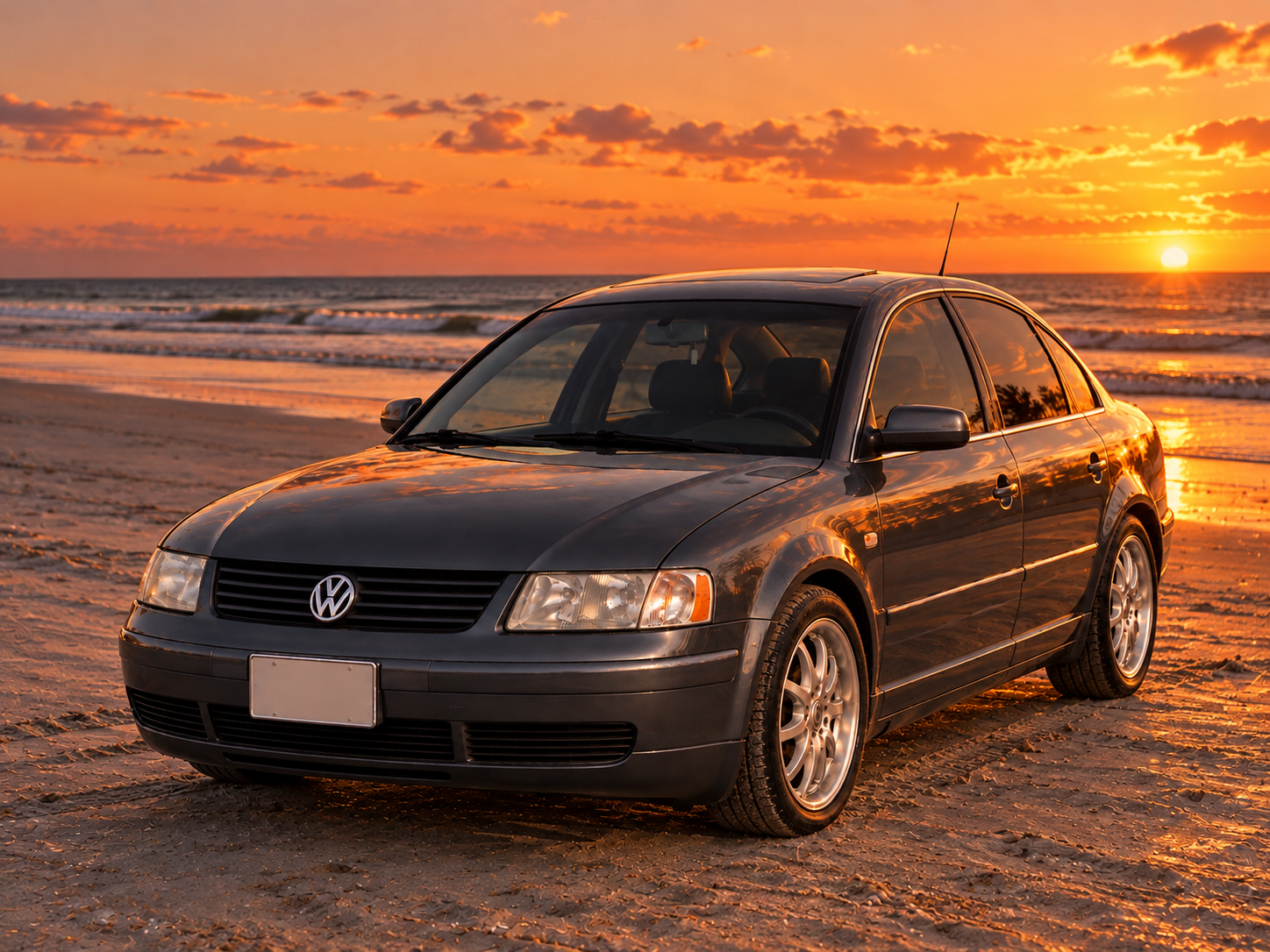
The Passat That Started It All
One broken timing belt, a whole lot of lessons, and the beginning of a lifelong obsession with German cars.
It all started with a broken-down Ford Escort.
I was a young airman living in New Jersey, and when my daily driver finally gave up, I needed another car. That's how a 2001 Volkswagen Passat 1.8T came into my life.
At the time, I was still learning my way around automotive repairs. I'd worked on machinery, but I certainly wasn't the mechanic I am today. Little did I know that this Volkswagen would become one of the most influential cars I'd ever own.
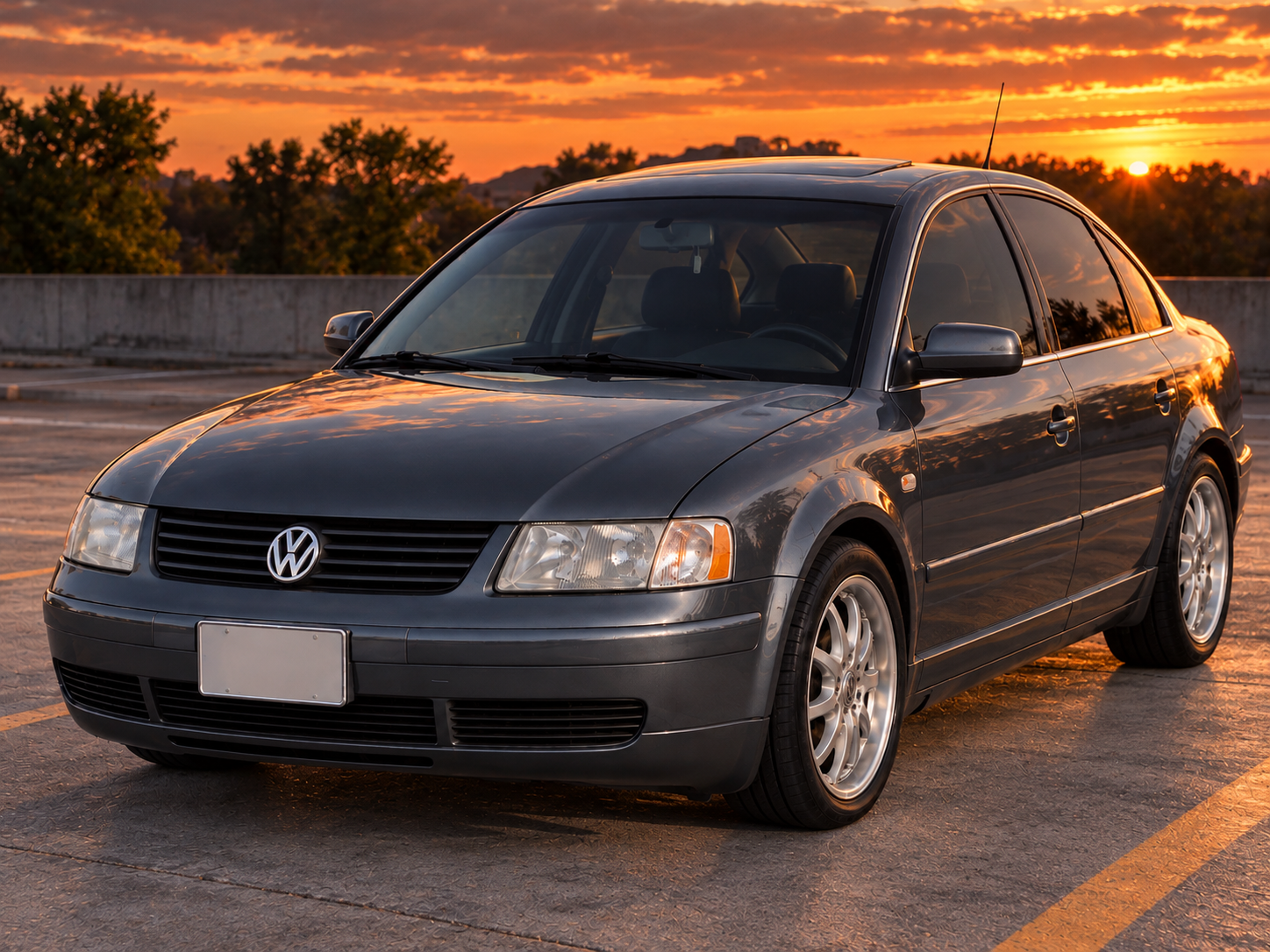
Four Miles Through the Blueberry Fields
One night, I was out driving the Passat, giving it a little more hell than I probably should have, when the engine suddenly died.
And it wasn't coming back.
My friend and I ended up pushing that car four miles home, down roads lined with blueberry fields in rural New Jersey.
Four miles. Pushing a Volkswagen.
Looking back, though, what I remember most isn't necessarily the broken car or even the long walk home. It's the fact that we pushed it home.
We.
That's a word I've come to appreciate more and more over the years.
These days, life sometimes seems to involve a lot more "I" than "we." I miss those days when friends would just get together, work on cars, help each other out, and spend time together without needing a reason.
We didn't have much money. We didn't always know what we were doing. But we had each other, and somehow we always figured things out.
The older I get, the more I realize that sometimes the people, the memories, and the experiences along the way mean more than whatever we were trying to accomplish in the first place.
I'd give a lot to have some of those ordinary days back.
Anyway, back to that broken Volkswagen.
After some investigating, we discovered that the timing belt had snapped.
And I was about to begin one of the biggest mechanical learning experiences of my life.
My First Real Engine Job
Rather than give up on the car, I decided to repair it myself.
I tore into the engine, replaced the cylinder head, installed a new timing belt, and worked through a repair that was well beyond anything I'd previously attempted on an automobile.
About $3,000 later, the engine was back together.
There was just one problem.
It didn't run quite right.
I eventually found a Volkswagen technician willing to help me on the side. After looking over my work, he discovered that I hadn't set the correct number of chain links between the camshafts.
A seemingly small mistake, but an important one.
That experience taught me something I've carried with me ever since: technical information matters.
Understanding how something works is important, but so is having the correct procedures, specifications, and documentation to do the job properly.
Once the cam timing was corrected, the Passat was back on the road.
And I was hooked.
259,000 Miles of Learning
That Passat stayed with me for a long time.
Over the years, I installed two more timing belt kits and kept it going until it had accumulated 259,000 miles.
But simply keeping it running wasn't enough anymore.
I had developed a fascination with Volkswagen engineering, especially the 1.8T engine and the way these cars were put together.
I started learning about interchangeable components, factory options, and what could be accomplished by combining parts from different Volkswagen and Audi models.
And that's when I discovered the wonderful world of junkyards.
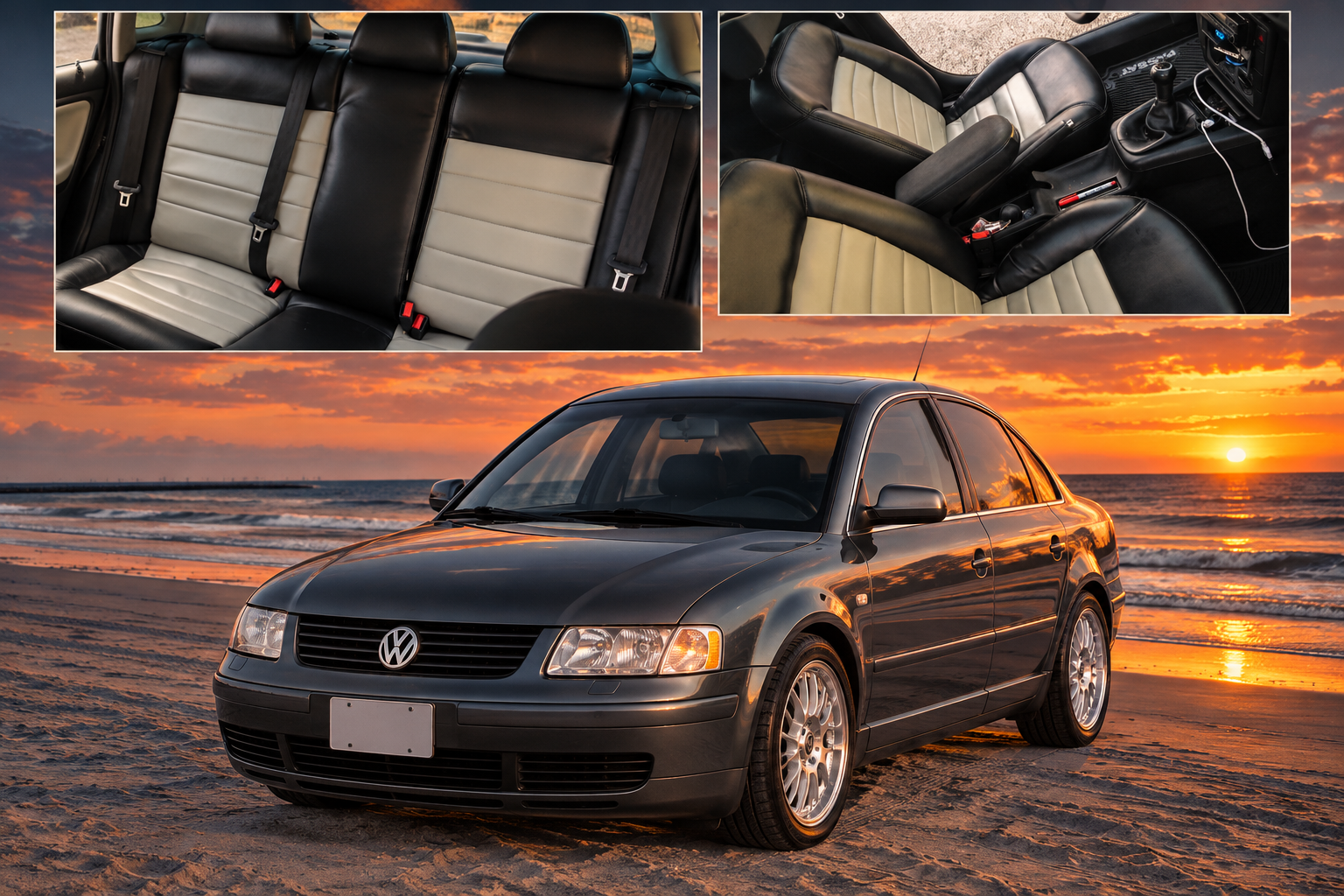
Building the Passat I Wanted
I couldn't always afford a newer or better-equipped vehicle, so I started improving the one I already had.
One of my favorite projects involved taking wiring from an Audi A4 and adapting it to install factory power-adjustable, heated seats with memory functions in a Passat that originally came with manually adjusted seats.
That project required far more than simply bolting in a different set of seats. It meant understanding the wiring, electrical systems, and how to integrate equipment the car had never been built with.
Over time, I added a quality stereo system, a rearview camera, aftermarket wheels, suspension upgrades, and larger brakes using Audi TT caliper brackets.
Some modifications I completed myself. Others I paid "professionals" to handle.
And unfortunately, that's where I learned another valuable lesson: just because someone gets paid to do a job doesn't necessarily mean they'll do it correctly—or care about the quality of their work as much as you do.
There were times I found myself going back over work I'd already paid to have done, or having to return the car so someone could correct their mistakes.
One experience that particularly stuck with me involved a suspension upgrade.
At the time, I was living in an apartment and didn't have the tools or workspace needed to tackle the job myself. So I took the Passat to a shop to have the new suspension installed.
When I got the car back, something wasn't right. Every time I drove over bumps, the suspension made an awful racket.
After investigating, I discovered that the springs hadn't been properly positioned against their seats. The shop had to redo the installation.
It was frustrating. I'd paid someone to do a job because I wasn't equipped to do it myself, only to find that I still had to troubleshoot their work afterward.
Experiences like that gradually changed my attitude toward repairs. I realized that having the right tools, technical information, and a place to work gave me something valuable: the ability to take responsibility for the quality of the finished job.
That's when I started making a point of doing as much of my own work as possible.
Not because I believed I knew everything. Far from it. I was still learning, and I still made mistakes.
But I cared enough to investigate when something wasn't right, learn how to correct it, and keep working until I was satisfied.
I didn't expect perfection from myself or anyone else. But I did expect the work to be done correctly, and if something was wrong, I wanted to understand why.
That philosophy has stayed with me ever since.
The Car That Went Everywhere
My career in aviation eventually took me across the country, working as a contractor and moving from place to place.
And that old Passat came along for the ride.
Across states, across the country, and even aboard a ship bound for another country. That Volkswagen traveled farther than I ever imagined when I first bought it in New Jersey.
I even used it to tow during my moves, hauling my belongings from one place to another as my aviation career took me wherever the next opportunity happened to be.
Through all the moves, the long drives, repairs, and modifications, the car remained a constant part of my life.
It had become something personal.
I knew its quirks, its problems, its strengths, and just about every component I'd replaced along the way.
And after spending so much time learning the 1.8T platform, I eventually decided to take the project even further.
I started collecting everything needed for a big-turbo build.
The plan was finally coming together.
Unfortunately, life had other ideas.
The Project That Never Got Finished
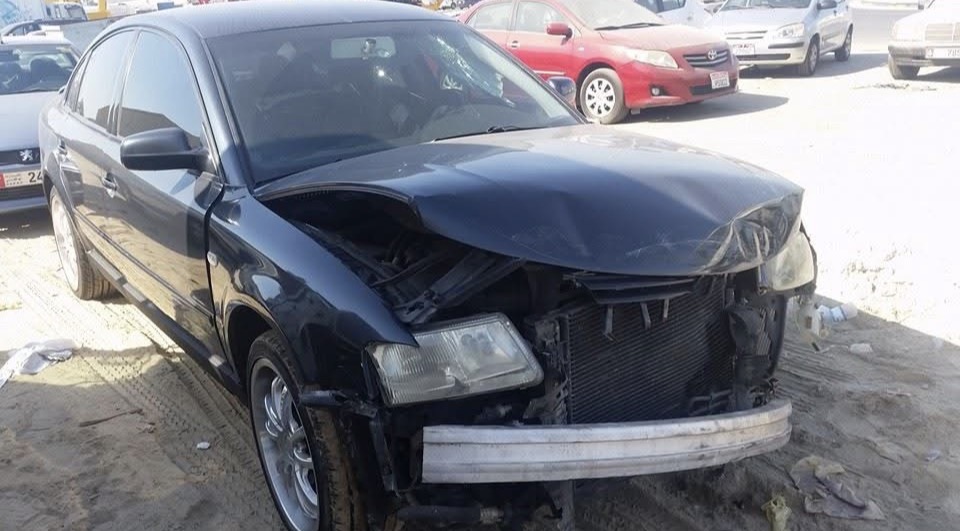
Before I could complete the turbo build, I wrecked the Passat.
After everything we'd been through together, losing that car was heartbreaking.
It wasn't valuable in the traditional sense. With 259,000 miles and years of modifications, it probably wouldn't have impressed most people.
But to me, it was irreplaceable.
That was the car that taught me how to rebuild an engine, how to read factory technical information, how to troubleshoot Volkswagen electrical systems, and how much could be accomplished with patience, determination, and a willingness to learn.
It was also the car that made me fall in love with German automobiles.
I couldn't simply replace it.
But I could find something that carried its spirit forward.
One Last Life for the 1.8T
As it turned out, the Passat still had one more adventure ahead of it.
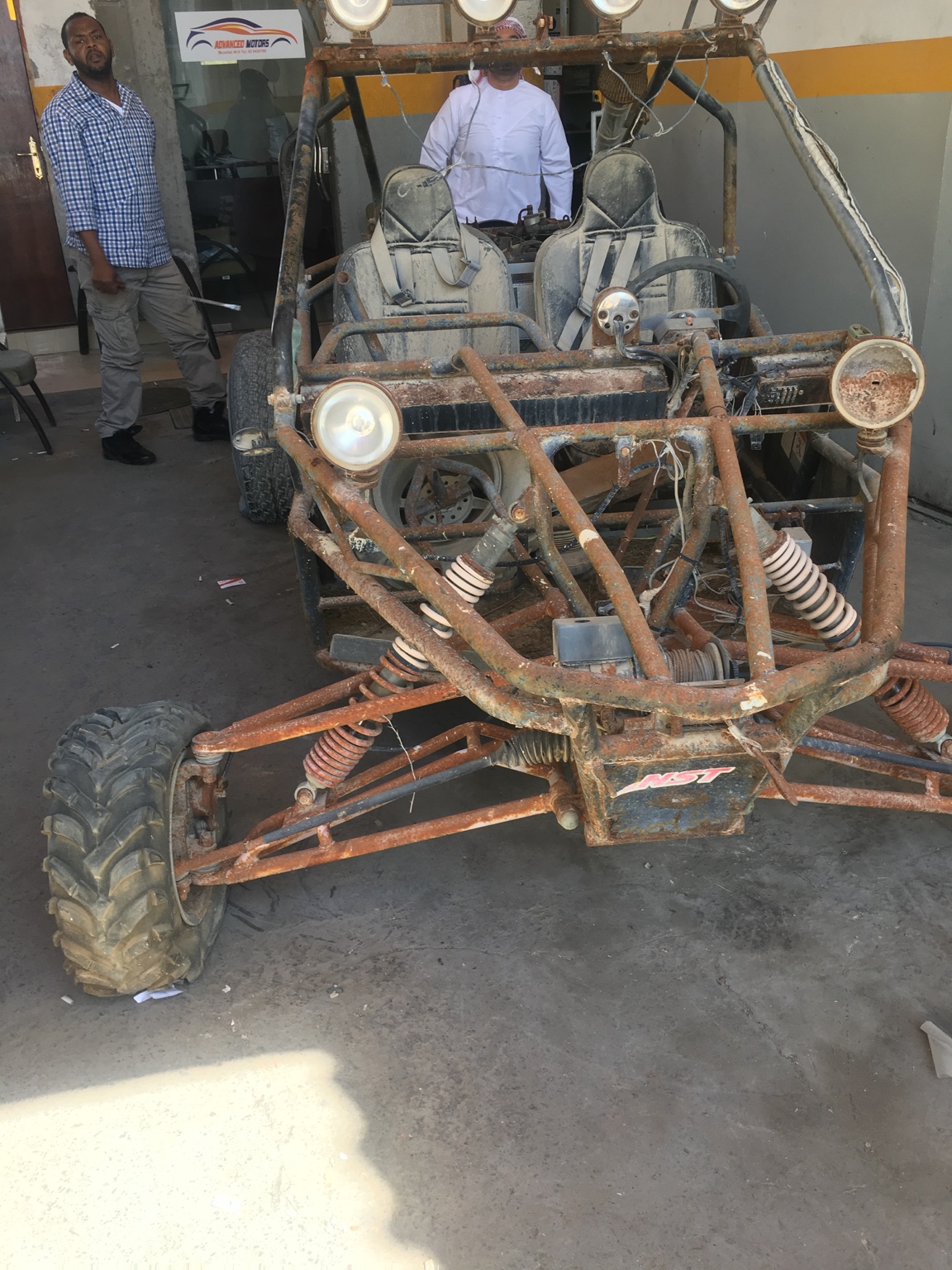
Although the car itself was gone, I gave its turbocharged 1.8T engine, accelerator pedal, instrument cluster, and ignition components to my friend Omar. He put that Volkswagen engine to work in an off-road buggy he built.
While Hanz carried forward the big-turbo plans I never completed on the Passat, Omar gave its original engine a completely different future.
The Passat was gone. But its heart kept going.
A New Beginning: The Audi Cabriolet
After losing the Passat, I found myself staring at roughly $3,000 worth of parts I'd collected for the big-turbo build.
Parts I'd even paid to have shipped overseas.
Without the Passat, that expensive collection of parts might as well have been a pile of paperweights.
But I wasn't ready to give up on the project.
I needed another car. Specifically, I wanted a U.S.-specification Audi or Volkswagen with the same engine platform, preferably something as new as possible.
Now, I'll always believe the B5 was one of the most beautiful designs Volkswagen ever produced. But I decided it was time for something different.
That's how I ended up with a B6 Audi Cabriolet.
There was just one problem.
My budget.
Let's just say the Audi I could afford wasn't exactly a shining example of German engineering at its finest.
That thing had more warning lights on the dashboard than a Christmas tree.
It was in horrible condition.
But it was mine.
And project or not, I was going to fix it.
Once again, I found myself taking on a car that needed an enormous amount of work.
I jokingly say that I paid my college tuition in parts.
By the time I finished restoring that Audi, I'd invested an incredible amount of time, money, and mechanical education into it.
I saved a few pieces from the Passat, including its Volkswagen badge, stereo, and other small reminders of the car that started everything.
Today, that Audi has been extensively restored and is practically a new car in many respects.
And remember the big-turbo build I never got to finish on the Passat?
Well, the Audi got the big turbo. :)
More Than Just a Car
One of the things I've always loved about the Volkswagen and Audi community is the people.
Spend enough time around these cars and you'll discover that enthusiasts love talking about them. They'll share their experiences, offer advice, lend a hand, and sometimes spend an entire afternoon helping someone else work through a problem.
That's how I met my friend Nate.
Nate had built some impressive cars over the years, including an awesome 1.8T-swapped Volkswagen Corrado.
We eventually struck a deal.
I'd help him build his big-turbo, tuned SEAT Leon Cupra, and he'd help me build my GT2861-powered Audi Cabriolet.
What started as two guys helping each other build cars turned into something much bigger.
Over the years, Nate and I built a lot together. Not just cars, but friendships, memories, and families.
And through that shared passion, our circle continued to grow.
That's how we met our friend Omar.
Eventually, the three of us opened our first automotive repair shop together.
It's funny how life works sometimes.
A broken timing belt leads to an engine rebuild. An engine rebuild leads to a passion for German automobiles. That passion leads to another project, which leads to new friendships, shared experiences, and eventually a business.
Looking back, I realize the Passat gave me something much more valuable than mechanical knowledge.
It brought people into my life.
And that brings me back to something I mentioned earlier.
We.
When I was younger, it was just a word. Something you said without giving it much thought.
Back then, we didn't have much money. What we did have was time, knowledge, and a willingness to help one another. We'd trade labor, share tools, teach each other what we knew, and somehow find a way to get things done.
As life went on, things changed.
We grew older. We built families. Responsibilities grew, and the time we once had to spend helping each other became harder to find.
These days, the exchange looks a little different.
Instead of trading a Saturday afternoon helping a friend fix his car for another Saturday spent working on mine, I now provide those same skills as a service. My customers pay me for my time, experience, and workmanship, and that income helps support the people who depend on me.
But I've never wanted the relationship to end at the transaction.
Because behind every vehicle is a person. Someone who needs to get to work, take care of their family, or simply enjoy something they've worked hard to own.
And just as I once depended on friends to help me through a problem I couldn't solve alone, I recognize that my customers are trusting me to help them with something that matters to them.
That trust means something.
I still believe the best relationships are built through honesty, mutual respect, helping when you can, and doing what you say you're going to do.
The circumstances may have changed, but the idea behind that little word hasn't.
We.
The Passat was never really finished.
But in a way, that's what made it special.
It kept giving me another reason to learn something new, meet someone new, and take on another challenge.
And that passion eventually became part of the foundation for Das Werkstatt.
Some cars are just transportation. Others change the direction of your life.
That old Passat did exactly that.